Hospitality and foodservice
Water for combi-steam ovens
Steam generators and injection systems are highly sensitive to scale and chlorides. The right water keeps steam production stable, protects stainless steel and reduces downtime for descaling.
Why ovens need treated water
Each steaming cycle evaporates water and leaves its minerals behind. In a steam generator or on injection nozzles, hardness turns into scale that reduces steam output, damages heating elements and triggers error messages. Ovens that inject water directly into the cooking chamber are exposed in the same way at the nozzles and on the fan wheel.
Chlorides are the second risk. Softening does not reduce them, and at high concentration they can cause pitting corrosion of the stainless steel in the steam generator and cooking chamber. This is why oven manufacturers set limits for both hardness and chlorides.
Water parameters in oven specifications
| Parameter | What the manufacturer usually specifies | Why it matters |
|---|---|---|
| Total hardness | A maximum value, often low for steam generators | Scale in the generator and on heating elements |
| Carbonate hardness | A separate limit for some models | The part of hardness that precipitates first when heated |
| Chlorides | A maximum concentration in mg/L | Pitting corrosion of stainless steel |
| Conductivity | A minimum and sometimes a maximum | Level sensing in some generators, and protection against aggressive water |
| pH | A permitted range | Corrosion of metal parts |
Values differ between manufacturers, and between models with a steam generator or with direct injection. Always use the specification in the installation manual of your oven.
Treatment options
- Softening: reduces hardness and protects against scale when the chloride content of the incoming water is already below the manufacturer’s limit.
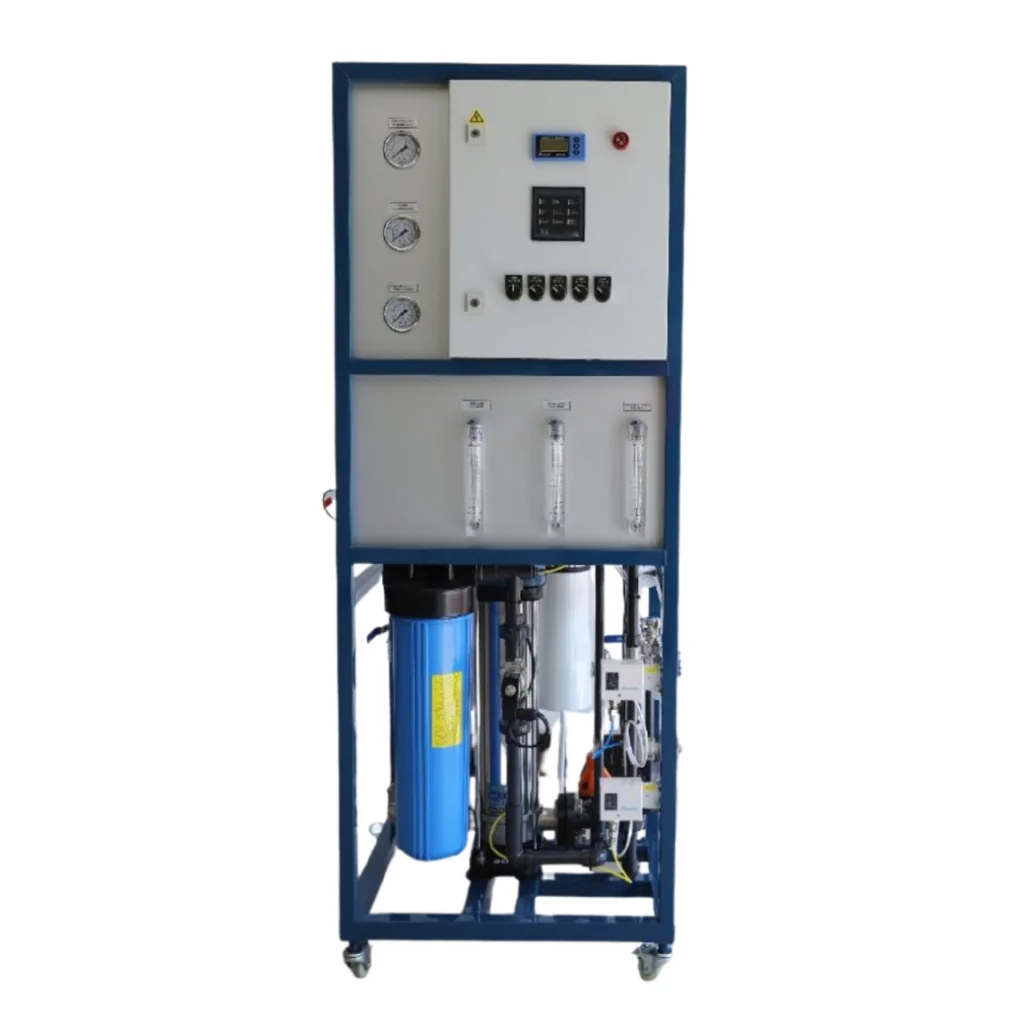
- Reverse osmosis: reduces hardness and chlorides together; it is chosen when chlorides or conductivity exceed the specification, with blending if a minimum conductivity is required.
- Pre-filtration: a sediment filter upstream protects valves and the treatment unit from particles.
Related equipment
Frequently asked questions about water for combi-steam ovens
Softening or reverse osmosis for a combi-steam oven?
Softening is enough when only hardness exceeds the manufacturer’s limits. If chlorides or conductivity are also too high, reverse osmosis is needed, because softening does not reduce them.
Does an oven with automatic descaling still need water treatment?
Automatic descaling deals with scale after it has formed, using chemicals and machine time. Treating the water reduces how much scale forms. The oven manufacturer states which water may be connected and whether treatment is required.
Which data does the oven manufacturer ask for?
Usually total hardness, carbonate hardness, chlorides, conductivity and pH of the water supplying the oven. A recent analysis from the water supplier or a laboratory is the reliable basis for choosing the treatment.
Other hospitality equipment guides
Send us your equipment list
Brands, models and your water hardness are enough to start the technical study.