Practical sizing guide
Gather the inputs that determine the right system
Sizing begins with the water you have, the water you need and the way it will be used. This guide helps prepare a technical enquiry for a new installation, an equipment replacement or a change in site demand.
The data that determine the size of a system
A water treatment system is sized on four inputs: the quality of the incoming water, the quality required at the outlet, the flow it must deliver at peak times and the volume it treats each day. When one of them is missing, the system usually ends up undersized, or oversized as a precaution.
| Input | How to obtain it | What it determines |
|---|---|---|
| Water analysis | Report from the water supplier or a laboratory: hardness, iron, manganese, conductivity, chlorine | Choice of technology and pretreatment |
| Required outlet quality | Water specification of the equipment manufacturer, or process requirement | Treatment sequence and residual hardness |
| Peak flow | Highest simultaneous demand, in m³/h or L/min | Hydraulic size of the valve and vessels, pressure drop |
| Daily consumption | Water meter readings, or an estimate from occupancy and equipment | Exchange capacity, regeneration frequency and salt consumption |
| Operating conditions | Operating hours, continuity required, pressure range, water temperature | Simplex, duplex or multiplex configuration |
| Installation | Available space, pipe diameter, drain and electrical supply | Physical format and connection of the equipment |
Peak flow versus daily consumption
The two figures answer different questions. Peak flow is the highest demand at any moment, for example when kitchens, warewashing and hot water run at the same time; it sets the hydraulic size of the equipment. Daily consumption, combined with the hardness to be treated, sets the exchange capacity the softener needs between regenerations.
Worked example
A restaurant uses 4 m³ of water per day. The incoming hardness is 30 °f (16.8 °dH) and the equipment requires softened water at 0 °f. The daily hardness load is 30 × 4 = 120 °f·m³. With a typical exchange capacity of about 5 °f·m³ per litre of resin, this corresponds to roughly 24 litres of resin per day of autonomy. The model is then checked against the peak flow, for example 3 m³/h, or 50 L/min.
Hardness unit conversion
| Unit | °f | °dH | mg/L CaCO3 | mmol/L |
|---|---|---|---|---|
| 1 °f (French degree) | 1 | 0.56 | 10 | 0.1 |
| 1 °dH (German degree) | 1.78 | 1 | 17.8 | 0.178 |
| 1 mmol/L | 10 | 5.6 | 100 | 1 |
Softener sizing calculator
Enter your water data to estimate the daily hardness load and the indicative resin volume. The result prepares your enquiry; the final model is confirmed after the technical study.
- Hardness to be treated
- 0 °f
- Daily hardness load
- 0 °f·m³/day
- Equivalent calcium carbonate
- 0 kg/day
- Indicative resin volume per day of autonomy
- 0 L
- Indicative salt consumption
- 0 kg/day
- Peak flow to compare with manufacturer data
- 0 L/min
Assumptions: 1 °dH = 1.78 °f, 10 mg/L CaCO3 = 1 °f, an exchange capacity of about 5 °f·m³ per litre of resin and about 150 g of salt per litre of resin per regeneration. Actual values depend on the resin, the salt dose and the equipment; Kinetico twin-tank systems regenerate according to the volume actually used.
Frequently asked questions about sizing
Which residual hardness should I aim for?
It depends on the use. Boilers, steam ovens and some process equipment require water close to 0 °f, while drinking water circuits often keep some residual hardness with a mixing valve. Equipment specifications and local regulations take precedence.
How is a reverse osmosis system sized?
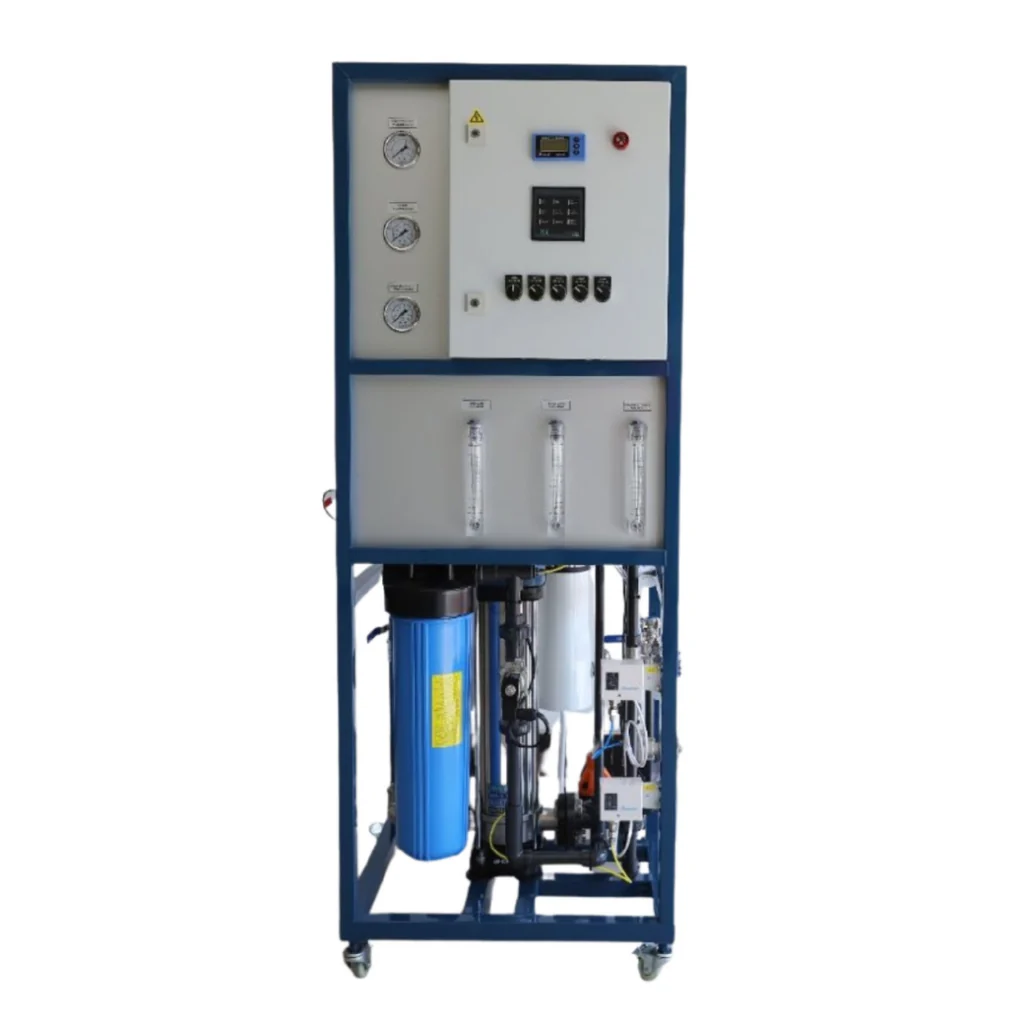
On the permeate volume needed per hour and per day, the feed-water conductivity and the water temperature. Rated production is given at a reference temperature, often 15 °C, and decreases in colder water, so the reference conditions must be checked.
How is a UV system sized?
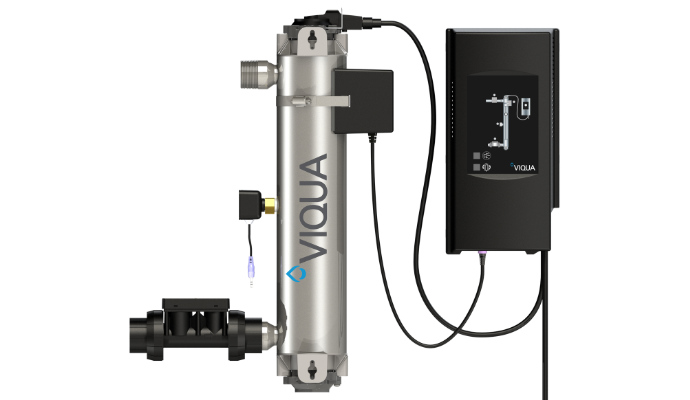
On the peak flow and the UV transmittance of the water. A lower transmittance reduces the dose delivered, so a larger reactor may be needed for the same flow. Pre-filtration and the water quality limits given by the manufacturer must also be respected.
Is a twin-tank softener sized differently?
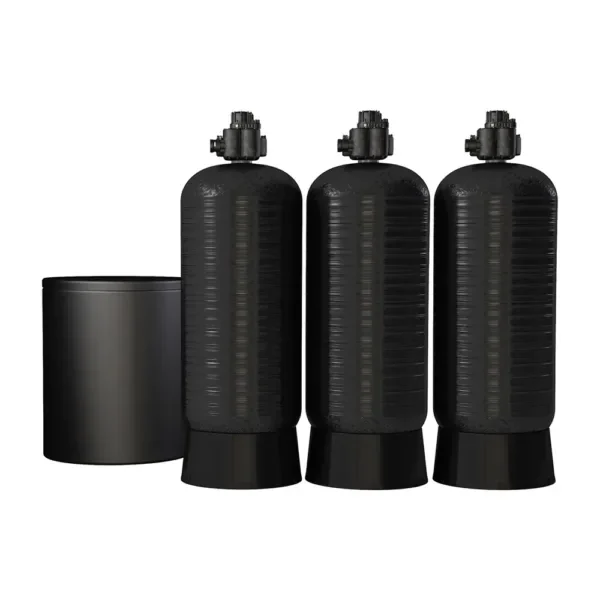
The hardness load is calculated in the same way, but a twin-tank system always has one column in service, so it supplies softened water continuously and regenerates according to the volume actually used. Sizing focuses on the capacity per column and the peak flow.
Related pages
Explore the equipment
Equipment, consumables and spare parts, organised by use.
 Water softeners
 Reverse osmosis systems
 UV water systems
 Water filters
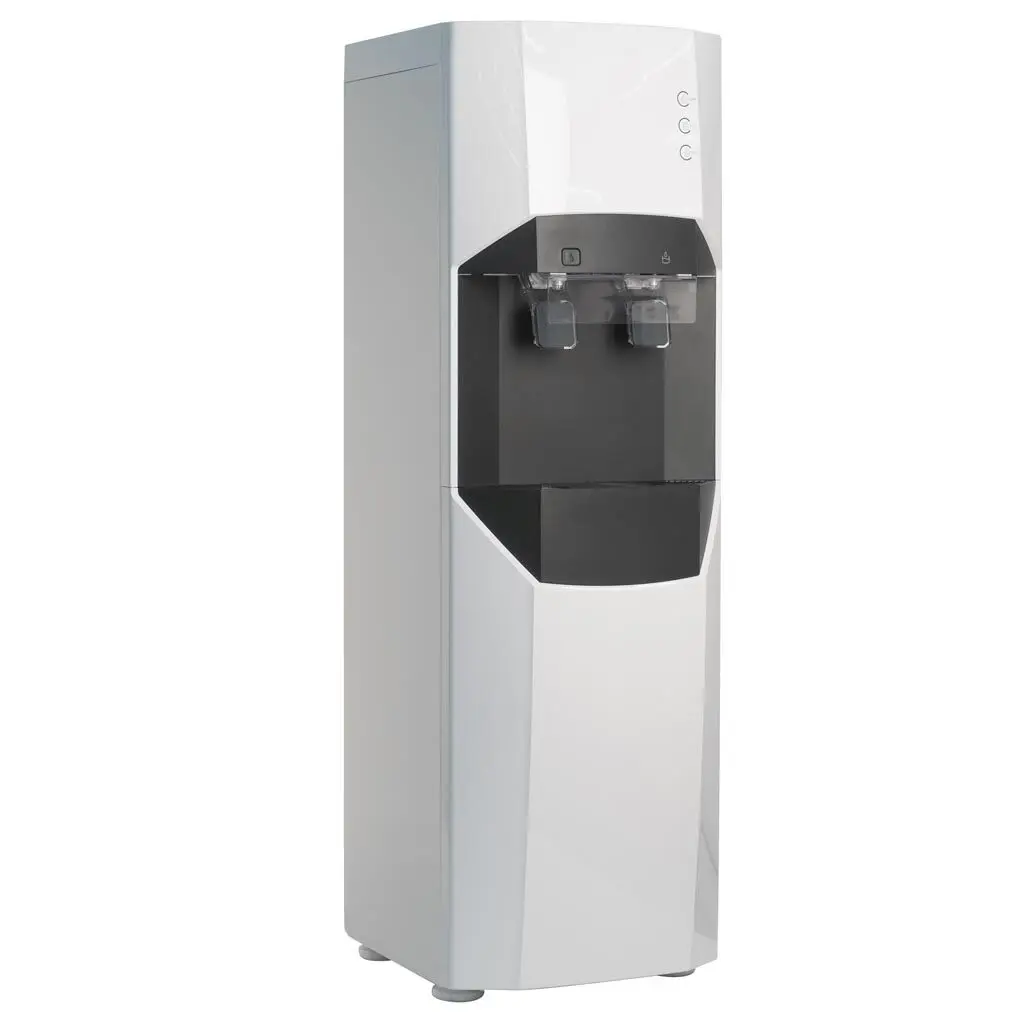
 Mains-fed water dispensers

Send your sizing requirements
Share the information available about your water and demand. Distinguish peak use from daily consumption and describe the installation conditions.
Fields marked with an asterisk are required.