Hospitality and foodservice
Water for coffee machines
Water is the main ingredient of every cup and a frequent cause of espresso machine breakdowns. Treating it protects the boiler and keeps the taste consistent from one service to the next.
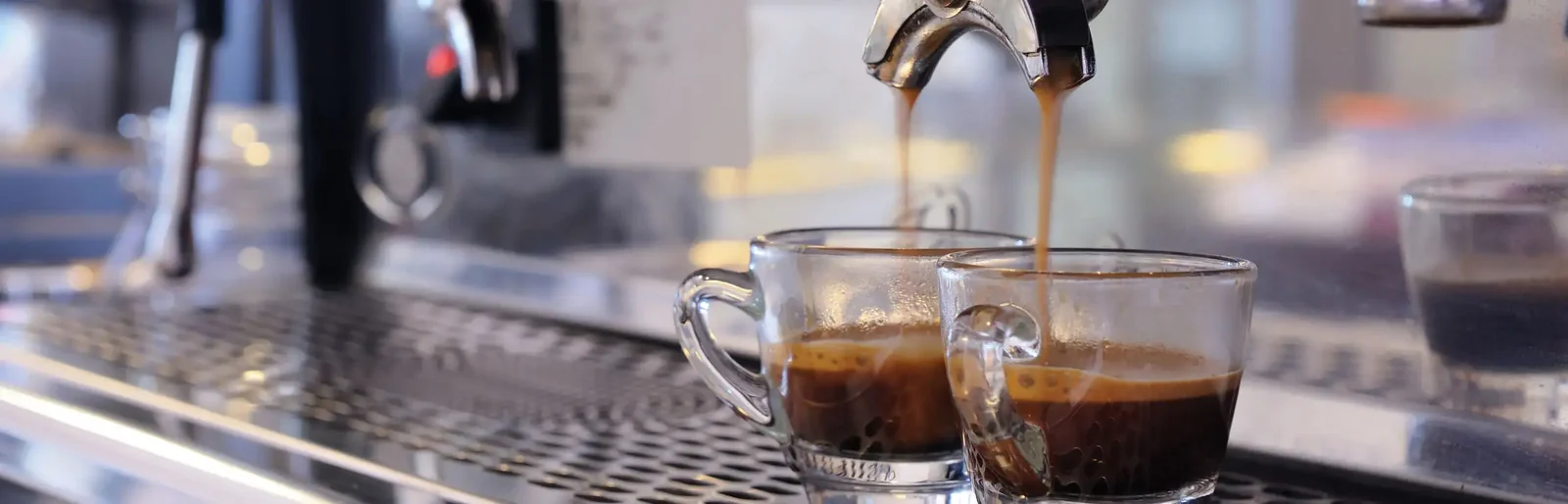
How water affects coffee and the machine
Hard water forms scale in boilers, heating elements, group heads and solenoid valves. Scale insulates heating surfaces, narrows passages and ends in breakdowns and descaling costs. Water that is too low in minerals has the opposite effect: extraction becomes flat and the water can be aggressive towards metal parts.
Chlorine and organic compounds affect aroma, while alkalinity influences acidity in the cup. The aim is therefore not water with as few minerals as possible, but a stable composition within the range set by the machine manufacturer and the roaster.
Water parameters to check
| Parameter | SCA reference value | Why it matters |
|---|---|---|
| Total dissolved solids (TDS) | 150 mg/L (75 to 250 mg/L) | Overall mineral content, which drives extraction and taste |
| Calcium hardness | 68 mg/L CaCO3 (17 to 85 mg/L) | Scale risk in boilers and heating elements |
| Total alkalinity | Around 40 mg/L CaCO3 | Buffers acidity in the cup and contributes to scale |
| pH | 7.0 (6.5 to 7.5) | Stability of taste and protection of metal parts |
| Chlorine | 0 mg/L | Off-flavours in the cup |
| Sodium | Around 10 mg/L | Rises with sodium softening and can affect taste |
Reference values from the Specialty Coffee Association (SCA) water quality standard. The machine manufacturer’s water specification takes precedence.
Treatment options
- Activated carbon filtration: reduces chlorine, taste and odour when the hardness is already within the machine’s range.
- Reverse osmosis with blending: reduces hardness, alkalinity and dissolved solids, then brings the mineral content back to the target with an adjustable bypass.
- Sodium softening: reduces scale-forming hardness but not alkalinity or total mineral content; use it for coffee only when the machine manufacturer accepts softened water.
Related equipment
Frequently asked questions about water for coffee machines
Is softened water suitable for espresso machines?
It protects against scale, but sodium softening leaves alkalinity unchanged and raises sodium, which can affect taste. Many machine manufacturers specify filtration or reverse osmosis with blending instead; follow their water specification.
Why blend reverse osmosis water instead of using permeate alone?
Permeate contains very few minerals. Coffee extracted with it tastes flat, and very low-mineral water can be aggressive towards boilers and fittings. Blending brings the mineral content back into the target range.
How often should a coffee water filter be replaced?
When it reaches its rated capacity in litres, which depends on the water hardness, or at the interval stated by the manufacturer, whichever comes first. A water meter on the supply makes this easy to track.
Other hospitality equipment guides
Send us your equipment list
Brands, models and your water hardness are enough to start the technical study.